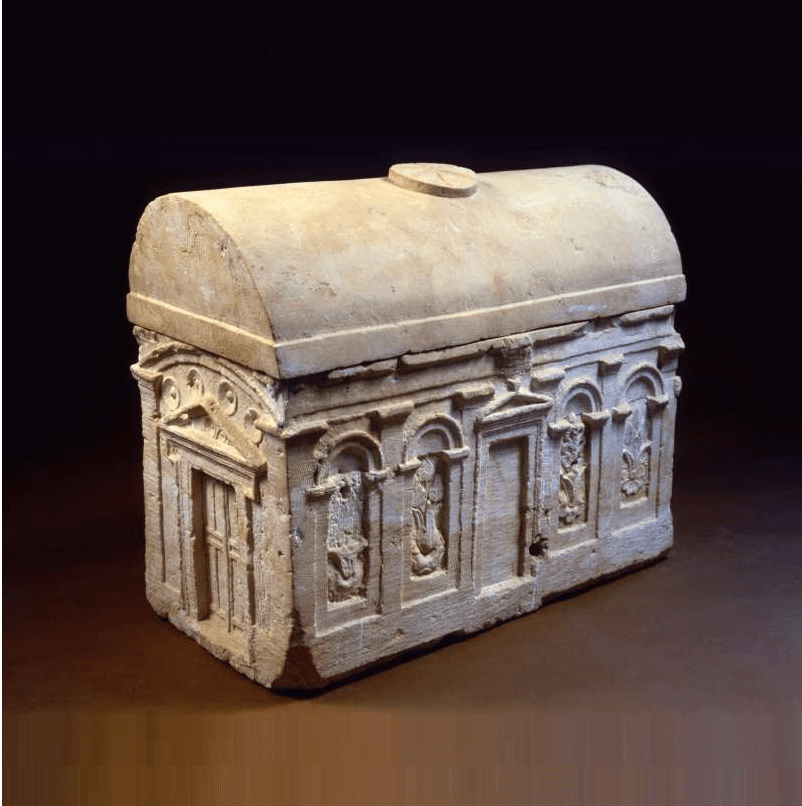
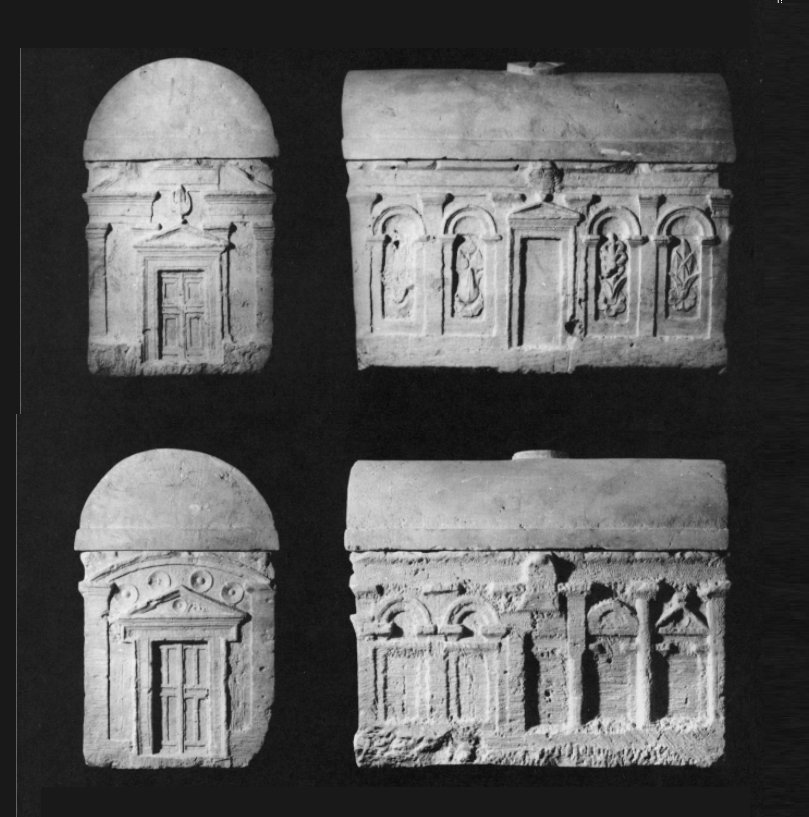
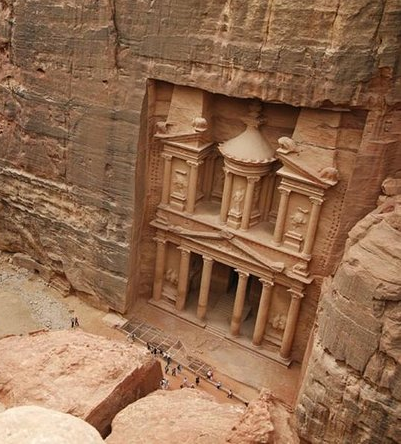
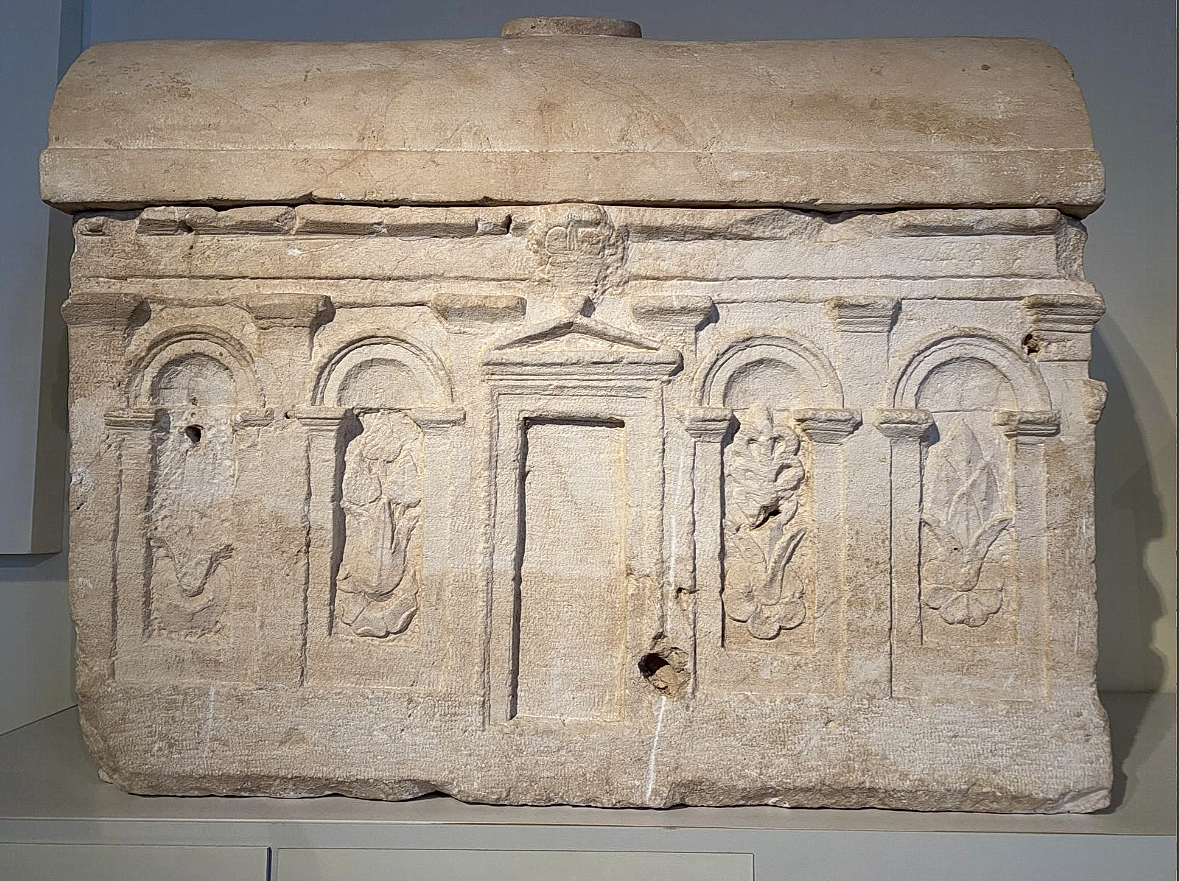
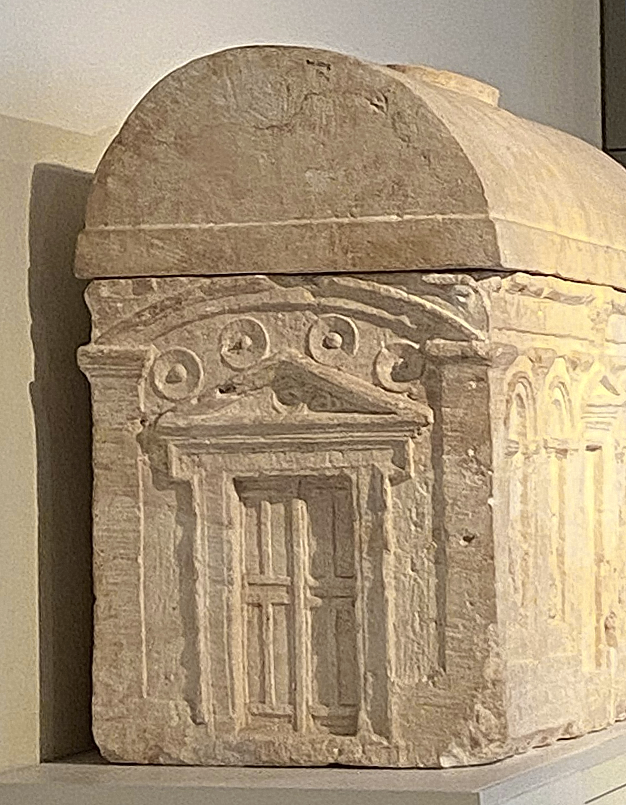
Hard limestone ossuary with a house-form façade, resembling the façades of Nabatean tombs at Petra
Site item id
20278
Collection name
Item period
Exhibition location
Israel Museum
An elaborate ossuary, made of hard limestone, decorated on all four sides with carved relief, discovered in a burial cave in southern Mount Scopus, Jerusalem. The ossuary is adorned with a depiction of a grand building featuring four ornate doors/gates and tall windows. J. L. Rahmani suggested that each side represents the façade of a splendid burial cave in Nabataean style, reminiscent of the royal rock-cut tombs at Petra. However, unlike the façades of the Petra tombs, which display the eagle symbol, human figures, and animals, on this ossuary various plants are seen through the tall windows. The presence of multiple gates also does not support the interpretation that these are four separate depictions of burial cave façades; rather, it seems the designer’s intention was to present a highly impressive building with entrances and windows, quite possibly influenced by the grand architecture of Petra’s rock-cut tombs. The back side of the ossuary was left unfinished.
Early Roman period