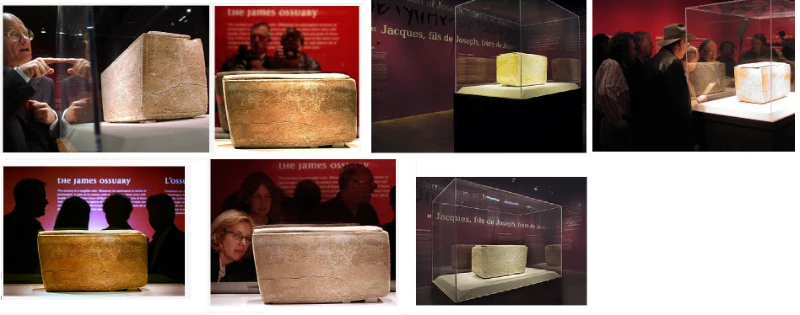
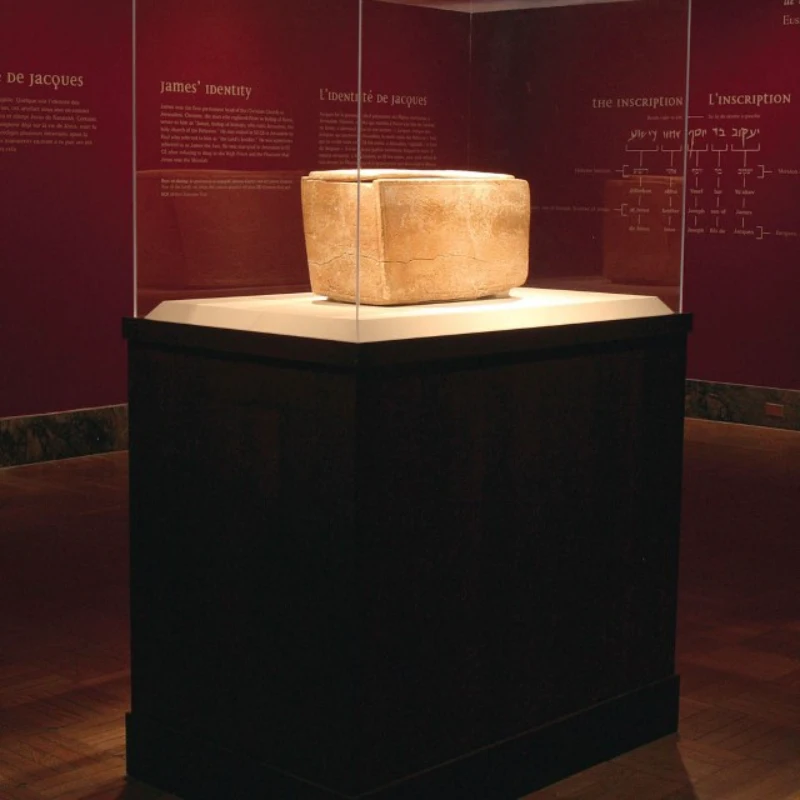
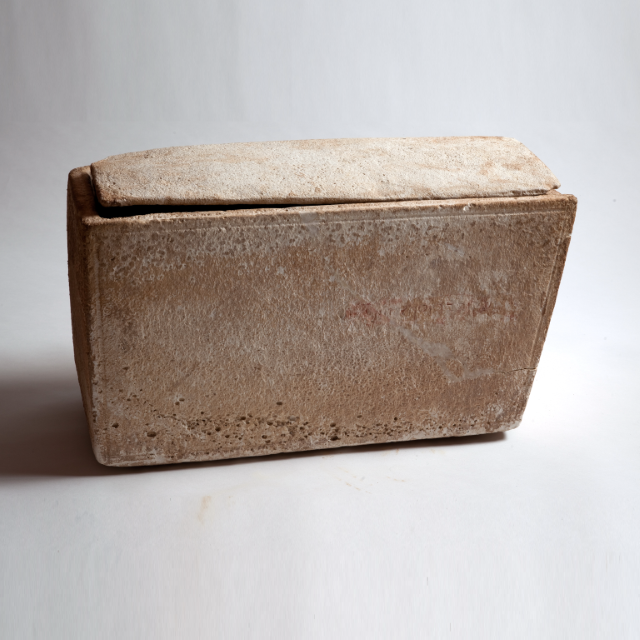
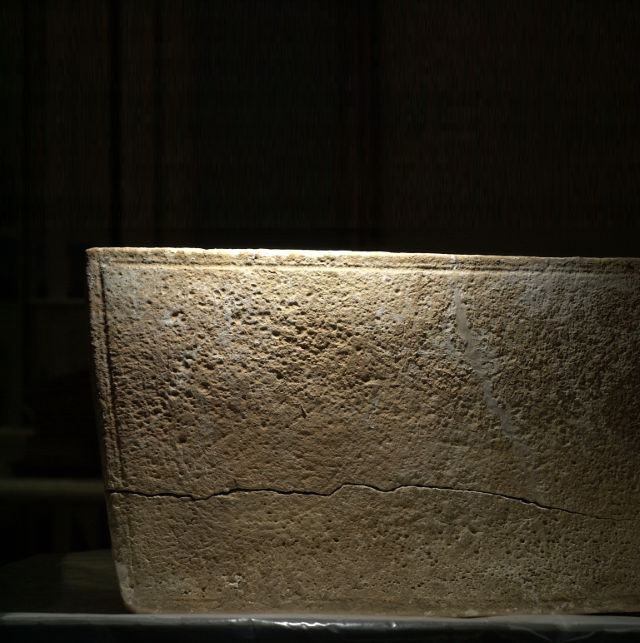
The James ossuary: Ya’acov (James), son of Joseph, Brother of Yeshua (Jesus) ossuary – יעקוב בר יוסף אחוי דישוע
Site item id
19700
Collection name
Item period
The James Ossuary (Brother of Jesus)
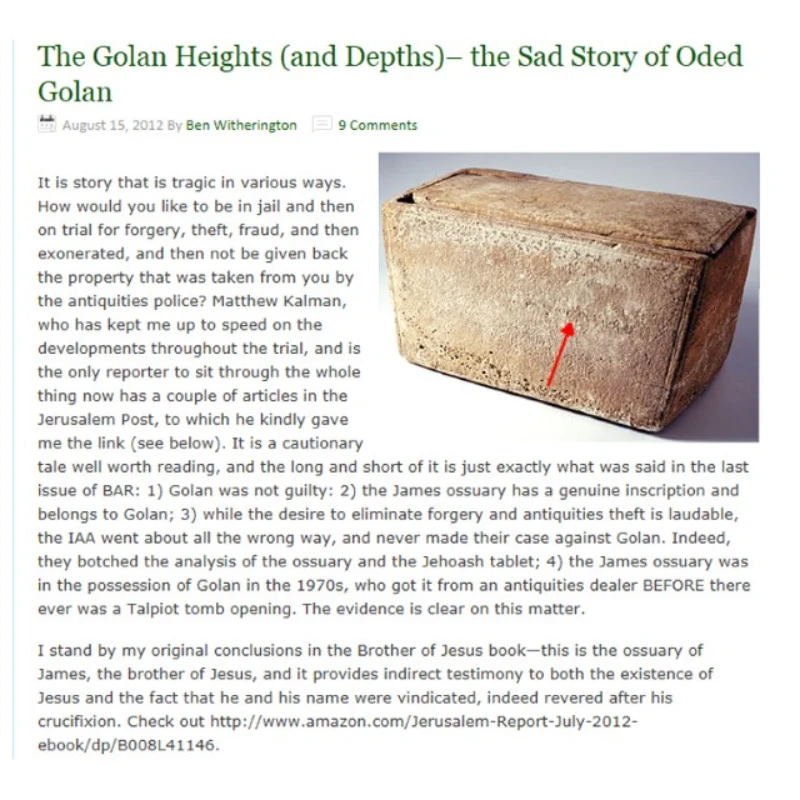
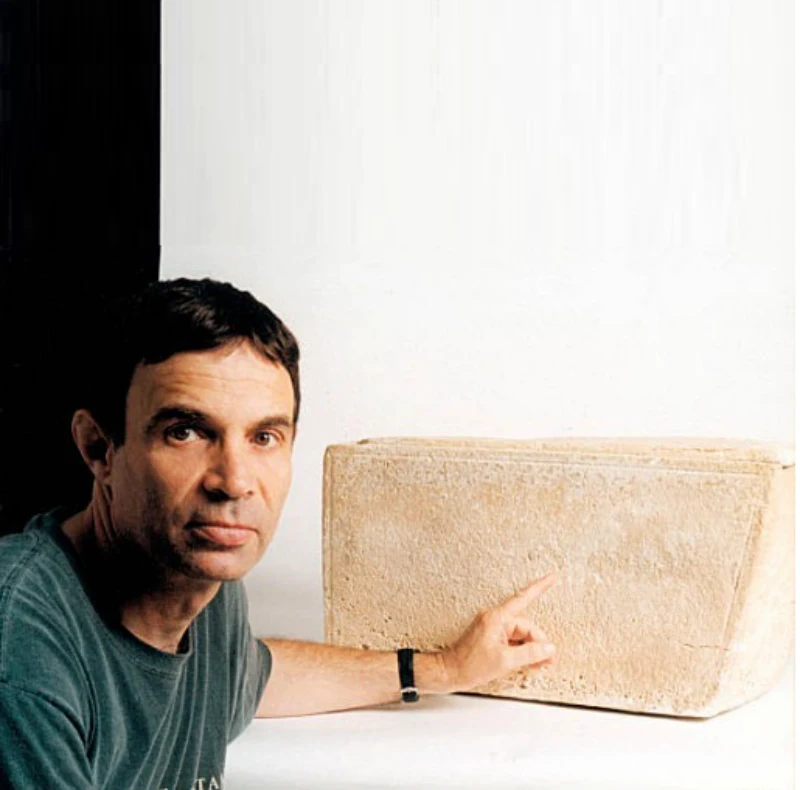
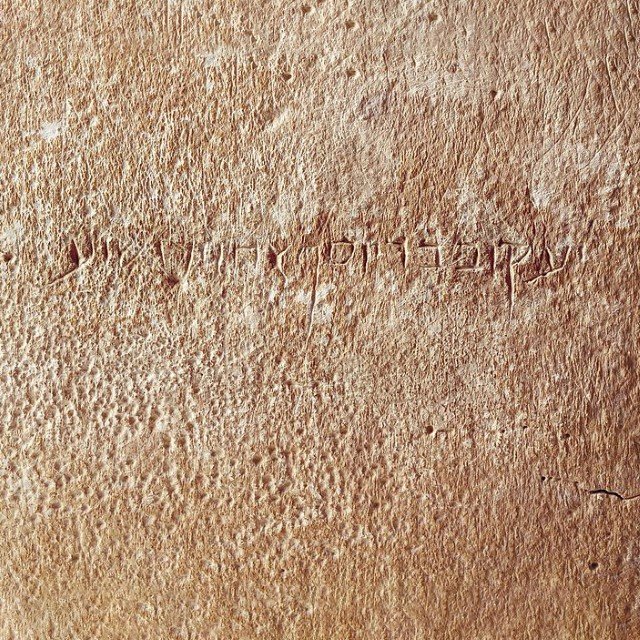
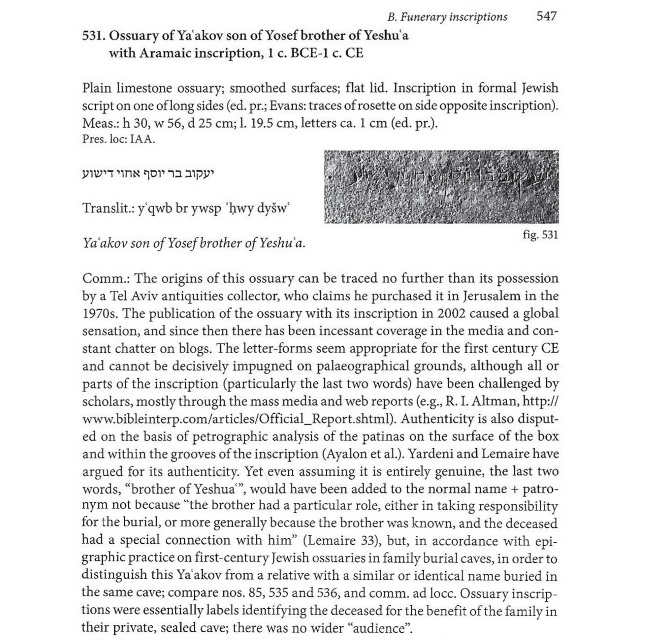
The James Ossuary is a first century AD limestone ossuary (bone-box) bearing the Aramaic inscription:
"Ya'akov Bar Yosef Achui DeYeshua" (= Ya'akov, son of Joseph, Brother of Jesus).
If the identification is correct, this inscription would represent the earliest known archaeological reference to Jesus of Nazareth, and the only artifact yet discovered that can plausibly be linked to a member of Jesus’ immediate family. Its significance would be without parallel in the study of early Christianity and late Second Temple Judaism.
Historical Background
The ossuary was most likely used as the final resting place of the skeletal remains of Ya'akov (James), the brother of Jesus of Nazareth. James was also known as "James the Just," St. James, and in Spanish tradition San Diego. He is mentioned both in the New Testament and by the first century historian Josephus Flavius (Antiquities of the Jews).
James served as the head of the Judeo-Christian community in Jerusalem around 37 AD, and is regarded as the first bishop of Jerusalem. He was executed by stoning at the order of the Sanhedrin in 63 AD.
Discovery and Identification
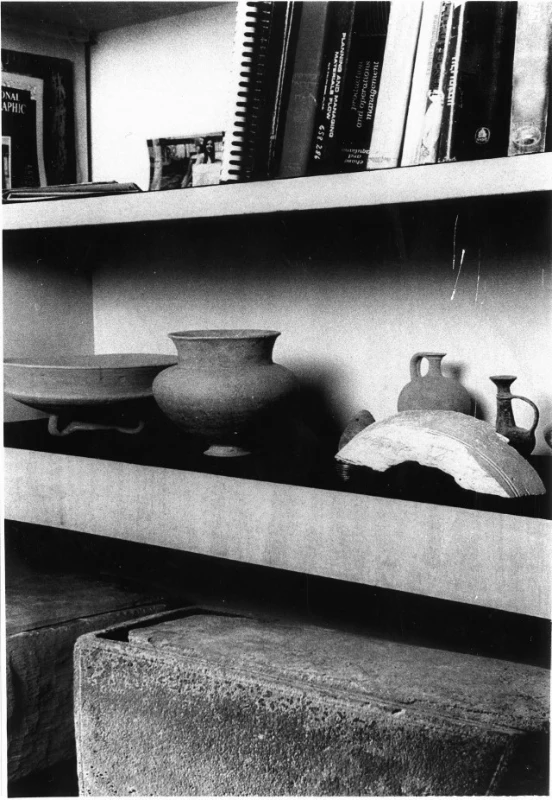
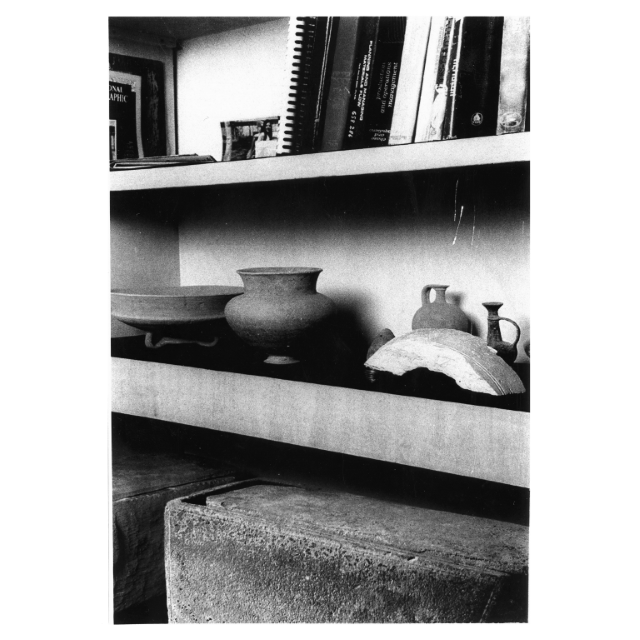
The James Ossuary was reportedly discovered in Silwan, East Jerusalem, and sold in the mid-1970s in the local antiquities market by a licensed Palestinian dealer. It reached an Israeli antiquities collector without recognition of its importance.
In 2000, the ossuary was examined by Prof. André Lemaire (Sorbonne University, expert in Hebrew and Aramaic), who identified that the ossuary should most likely be attributed to Ya'acov (James), the brother of Jesus. He published his findings in Biblical Archaeology Review (BAR), after which the ossuary was exhibited in a special display at the Royal Ontario Museum (ROM) in Toronto in 2002.
Rarity of the Name Combination
Each of the names inscribed (Ya’acov, Yoseph, Yeshua) was common among Jewish men in first-century Jerusalem. However, the combination of all three names - a father named Yoseph, one son named Ya’acov, and another named Yeshua - is exceedingly rare.
A statistical study conducted by Prof. Camil Fuchs (Tel Aviv University) evaluated the likelihood that an ossuary inscribed ‘Yacob son of Joseph brother of Jesus’ could refer to any individual other than the historical James, brother of Jesus of Nazareth. Based on conservative demographic and onomastic assumptions, Prof. Fuchs calculated an expected number of only 1.71 individuals bearing this full name configuration in the entire relevant population, with an upper 95 percent confidence limit of 3.63 individuals. Moreover, the explicit mention of a brother on an ossuary is an extremely rare phenomenon in the corpus; when it appears, it consistently marks a brother of exceptional public recognition. This contextual factor significantly strengthens the statistical analysis and renders the identification with James, son of Joseph (husband of Mary), brother of Jesus, historically and probabilistically compelling.
Scientific and Scholarly Examination
The ossuary and its inscription were independently examined by a wide range of international experts across multiple disciplines, including geology, geo-microbiology, patina, stone, engraving technologies, archaeology, paleography, isotopy, ancient names, and statistics.
Among those who examined the ossuary were:
- Prof. André Lemaire (Sorbonne University)
- Dr. Ada Yardeni (The Hebrew University of Jerusalem)
- Prof. Roni Reich (Haifa University / Israel Antiquities Authority)
- Dr. Hagai Misgav (The Hebrew University of Jerusalem)
- Prof. Wolfgang Krumbein (Oldenburg University, Germany)
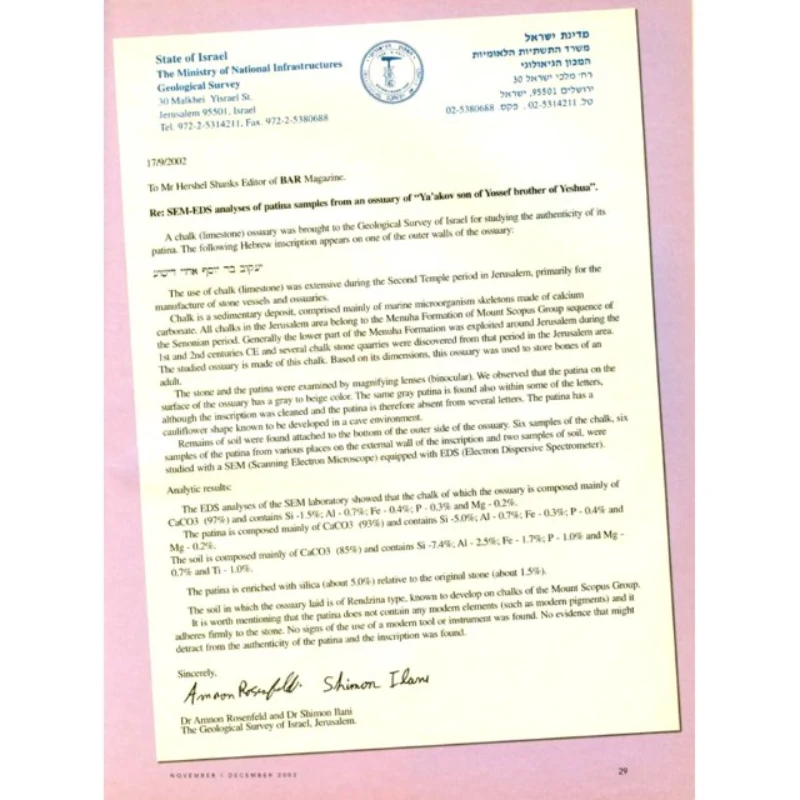
- Dr. Amnon Rosenfeld and Dr. Shimon Ilani (Israel Geological Survey)
- Dr. Ed Keall and colleagues (Royal Ontario Museum, Toronto)
- Prof. James Harrell (Toledo University, USA)
- Prof. Gabi Barkai (Bar-Ilan University)
- Prof. Howard R. Feldman (American Museum of Natural History, NYC)
- Orna Cohen (Israel Antiquities Authority)
- Prof. James Tabor (UNC Charlotte)
and others.
The consensus of these experts was that the inscription is authentic and dates to the first half of the first century AD.
Scientific Tests and Patina Analysis
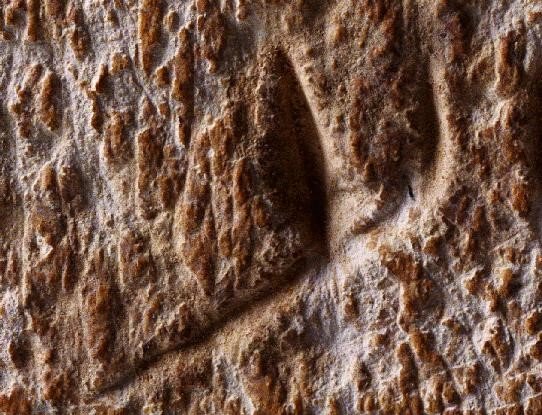
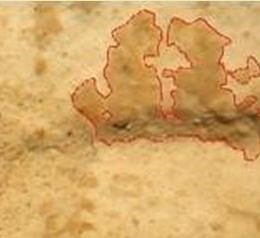
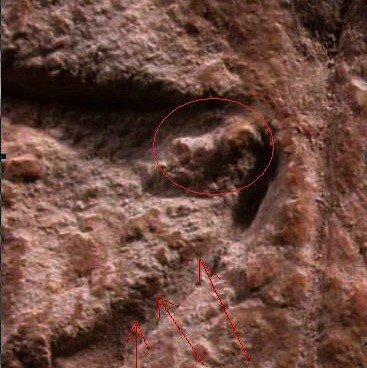
Microscopic photography and laboratory testing demonstrated conclusively that a natural patina had developed inside the grooves of the inscription over many centuries.
Microorganisms (bacteria) living on the stone while it was in the burial cave created a biological patina layer, which over time became an integral part of the stone. This patina was identified inside the grooves of multiple letters.
Patina, formed by the biological activity of bacteria on stone surfaces, develops naturally, gradually, and over long periods – and cannot be artificially produced without being exposed by scientific testing.
In a comprehensive verdict delivered by the Jerusalem District Court on March 12, 2012 (Criminal Case 482/04), Judge Aharon Farkash ruled that biological patina had been identified inside the grooves of the inscription, including in the word “Yeshua” (“Jesus”), with isotopic composition consistent with an ancient inscription. He accepted Prof. Krumbein’s conclusion that “the patina on the ossuary developed over hundreds, if not thousands, of years, and that the patina within the inscription and the patina on the ossuary were formed during the same period of time.”
The State did not appeal this verdict.
The presence of bio-patina is considered decisive scientific proof that the inscription is ancient and not a modern addition.
Scholarly Publication and Recognition
The ossuary was formally published in the scientific corpus of ancient inscriptions of Israel:
Corpus Inscriptionum Iudaeae / Palaestinae - Volume 1, Jerusalem, Part 1: 1-704.
In a 2019 survey conducted by Haaretz (Nir Hasson), Israeli archaeologists ranked the James Ossuary as the most important archaeological discovery in Israel in the last 70 years.
Significance
The James Ossuary stands as one of the most extraordinary artifacts ever discovered in the Land of Israel:
- It bears the earliest known inscription mentioning Jesus.
- It is the only archaeological artifact directly linked to a member of Jesus’ family.
- Its authenticity has been confirmed by a broad, multidisciplinary team of experts.
- Scientific and statistical analyses independently converge on the conclusion that it belonged to James, the brother of Jesus.
This convergence of textual, scientific, statistical, and historical evidence establishes the James Ossuary as a discovery of singular importance to both biblical archaeology and world history.
References:
Jerusalem District Court, Case No. 482/04, State of Israel v. Oded Golan (Hon. Judge Aharon Farkash, verdict dated March 14, 2012). Excerpts from the official court verdict referring to the identification of natural patina that developed within the engraved grooves of the James Ossuary inscription, with expert testimonies by Prof. Wolfgang Krumbein, Prof. Yuval Goren, Orna Cohen, Dr. Dan Rahimi, Dr. Amnon Rosenfeld, and Dr. Shimon Ilani.
Prof. Howard R. Feldman, Touro University: GeoArchaeology of Israel, Touro University Press, New York, 2019. ISBN 9781644690185 (ebook) - Chapters 10 & 11. Prof. Feldman is a fellow of the Geological Society of America and Research Associate at the American Museum of Natural History.
Dr. Amnon Rosenfeld (Geological Survey of Israel, Jerusalem), Prof. Howard Feldman (American Museum of Natural History, New York), Prof. Wolfgang Krumbein (Carl von Ossietzky University, Oldenburg, Germany): "Scientific Research, The Authenticity of the James Ossuary," Open Journal of Geology, 2014, 4, 69–78.
Prof. André Lemaire, Professor of Hebrew and Aramaic Philology and Epigraphy, Department of Historical and Philological Sciences, Sorbonne University, Paris.
Dr. Ada Yardeni, leading palaeographer and renowned scholar of West-Semitic epigraphy, especially of ancient Hebrew and Aramaic scripts, The Hebrew University of Jerusalem.
Prof. Ronny Reich, Israeli archaeologist, excavator, and scholar of the ancient remains of Jerusalem.
Prof. James D. Tabor, Professor of Ancient Judaism and Early Christianity, University of North Carolina at Charlotte. Lecture available at: https://www.youtube.com/watch?v=oRfFZAVu3jM
Prof. Camil Fuchs, Department of Statistics and Operations Research, Tel Aviv University: "Demography, literacy and names distribution in ancient Jerusalem – How many James/Jacob son of Joseph brother of Jesus were there?" Polish Journal of Biblical Research 4/1 (2005), 3–30.