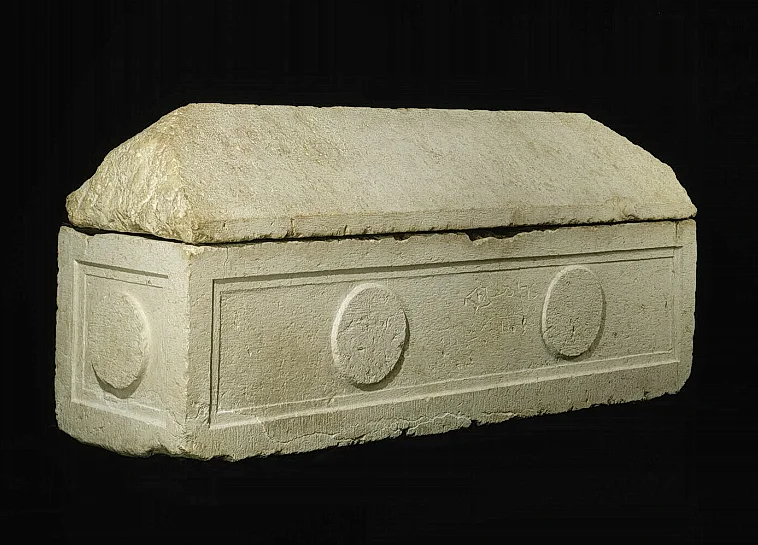
A sarcophagus discovered in the “Tombs of the Kings” complex in Jerusalem. The sarcophagus is inscribed “ṢDN MLKTA” in Syriac and “ṢDH MLKTʾ” in Aramaic.
Site item id
20461
Collection name
Item period
Storage location
Louvre Museum
A sarcophagus (large stone coffin) discovered in the “Tombs of the Kings” complex in Jerusalem. On the sarcophagus is inscribed the words “ṢDN MLKTA” in Syriac and “ṢDH MLKTʾ” in Aramaic. Some maintain that this sarcophagus was the burial place of Queen Helena, the convert to Judaism (the queen came to Jerusalem from a region located between Assyria and Armenia), and that “Ṣada” or “Ṣadan” is another version of her name.
The monumental burial estate (located in East Jerusalem, near the American Colony Hotel) was first excavated at the order of the Ottoman governor of Jerusalem in 1847, but no objects were found inside the tomb except for sarcophagi (the objects were most likely plundered centuries earlier, or removed and sold by locals on the Jerusalem antiquities market). A professional archaeological excavation was carried out by the French archaeologist Félix de Saulcy in 1863.
Two of the sarcophagi, including the queen’s, were transferred to the Louvre Museum in Paris, while another sarcophagus is housed in the Islamic Waqf Museum on the Temple Mount in Jerusalem.